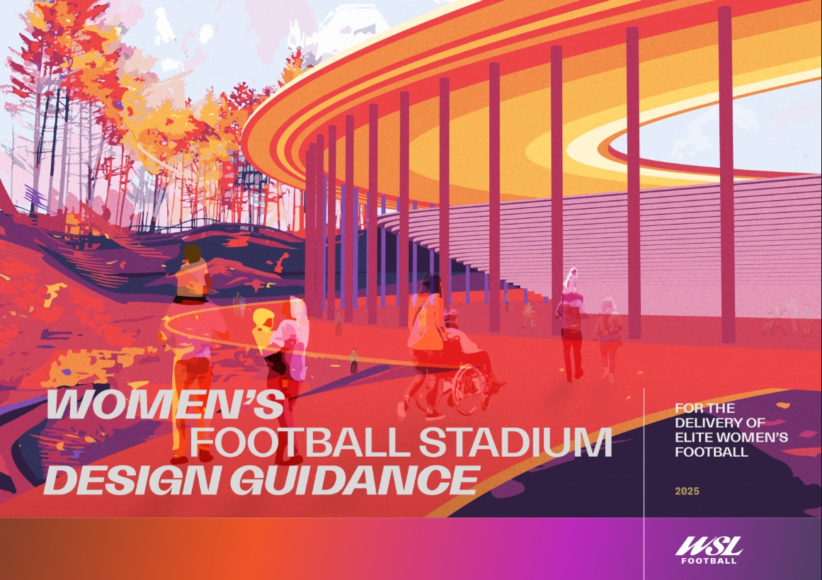




WSL Football has unveiled a world-first framework setting new standards for the design and delivery of elite women’s stadiums across England — a major step forward for inclusivity, accessibility, and sustainability in the game.
The new Design Guidelines for the Delivery of Elite Women’s Stadiums aim to support clubs, local authorities, and architects in building or upgrading venues specifically designed for women’s teams. The move reflects the rapid growth of the women’s game and a wider recognition that traditional football venues — often built with male players and supporters in mind — must evolve to meet the needs of all fans and athletes.
“We’re thrilled to unveil this document,” said Hannah Buckley, Head of Safety, Sustainability and Infrastructure at WSL Football. “It was acknowledged that female-specific stadiums were a blind spot in the industry. Our hope is that this guidance will be a catalyst for change moving forward.”
A People-First Approach to Stadium Design
Developed in collaboration with AFL Architects, Mott MacDonald, and Forward Associates, the guidelines are the result of an extensive consultation process. Stakeholders included current and former players, coaches, medical teams, fans, media, and sustainability experts — all contributing to what the future of women’s football venues could look like.
Among the key design principles outlined are:
-
Inclusivity and Accessibility:
-
Adjusting WC ratios from 80/20 male-female to 45/45, with 10% gender-neutral facilities.
-
Dedicated family toilets, baby-changing facilities, and multi-faith reflection spaces.
-
Spaces for players, media, and staff to breastfeed or care for children.
-
-
Enhanced Player Facilities:
-
Menstruation provisions, upgraded lighting and mirrors, and separate areas for U18 players.
-
Distinct changing areas for male and female managers and staff.
-
-
Improved Fan Experience:
-
Accessibility for disabled supporters, sensory rooms, and safe, well-lit travel routes.
-
Alcohol-free seating zones and dedicated fanzone areas.
-
Sustainable transport options and climate-conscious site selection.
-
Building for the Future
Architect Kathleen Carthy of AFL Architects described the initiative as “a bold and necessary evolution in how we design for the women’s game.” The guidance champions a human-centred, sustainable approach that places equality and safety at its core.
Similarly, Ruth Shilston, Technical Director for Buildings at Mott MacDonald, highlighted the opportunity to “shape industry standards that will transform how we design, build, and experience football stadiums,” embedding sustainability and climate resilience into every stage of development.
A Catalyst for Growth
The guidelines form a key part of WSL Football’s ten-year stadia strategy, which aims to unlock main stadiums, enhance existing assets, and ultimately support clubs in building new, purpose-driven facilities.
As women’s football continues to surge — from record attendances at the Barclays Women’s Super League to the national team’s success on the global stage — the creation of gender-inclusive infrastructure marks a vital next step in ensuring that progress is matched by investment and innovation.
You can read the full WSL Design Guidelines here.