Formula One has always been about speed, engineering, and glamour. But in recent years, another industry has accelerated into the paddock at full throttle: fashion. From luxury houses appearing on team kits to premium watchmakers becoming deeply embedded in the sport’s identity, F1 is increasingly becoming as much a runway as a racetrack.
The transformation is impossible to ignore. Drivers arrive at races in carefully curated outfits, team launches resemble fashion campaigns, and luxury brands now see Formula One as one of the most powerful lifestyle platforms in global sport. The question is no longer whether fashion belongs in F1, it’s whether fashion is beginning to take over Formula One entirely.
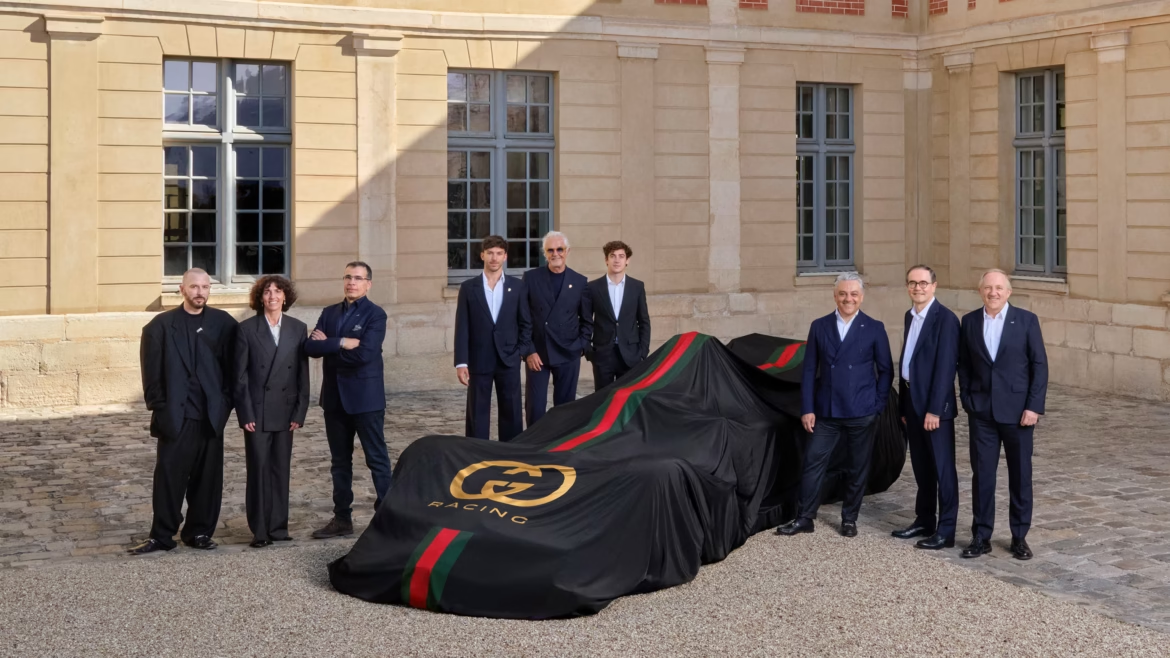
One of the clearest examples is todays news that Gucci is partnering with Alpine Formula One Team to become Gucci Racing Alpine Formula One Team. The collaboration signals how luxury fashion brands are no longer content with occasional celebrity endorsements; they want direct involvement with teams themselves. Gucci’s association with Alpine reflects a broader strategy of aligning high fashion with the youthful, global audience that Formula One now attracts.
At the same time, LVMH has expanded its presence within Formula One, further cementing the relationship between luxury and motorsport. The owner of brands such as Louis Vuitton, Dior, and Moët Hennessy recognises F1’s enormous cultural reach, particularly among younger audiences discovering the sport through streaming, social media, and lifestyle content. Formula One is no longer just competing with other sports for attention, it is competing with entertainment and fashion industries for cultural relevance.
Fashion labels are also becoming integral to team identities. Hugo Boss sponsors Visa Cash App Racing Bulls, continuing a relationship between tailoring and motorsport that stretches back decades. However, today’s partnerships feel different. They are no longer limited to logos on uniforms; they shape the visual image and commercial personality of entire teams.
Meanwhile, sportswear giant Puma has become one of the dominant fashion forces in Formula One by supplying team wear for both Scuderia Ferrari and McLaren Formula 1 Team. One of the most significant recent developments is Adidas entering Formula One through its partnership with Red Bull Racing. The move highlights how major global sportswear brands now view F1 as a mainstream lifestyle and fashion platform rather than simply a motorsport series. Adidas bringing its branding, apparel expertise, and streetwear influence to Red Bull further blurs the line between team kit and fashion collection. In today’s Formula One, team apparel is designed not only for performance in the garage but also for fans who want to wear race-inspired clothing as part of everyday fashion culture. The partnership also reflects Red Bull’s wider image as a youth-driven, globally recognisable brand that naturally aligns with modern sportswear and fashion trends.
Team apparel is no longer designed solely for mechanics and engineers — it is now sold as lifestyle merchandise worn by fans far away from any racetrack. Ferrari jackets, McLaren trainers, and paddock-inspired streetwear have become fashion statements in their own right.
Luxury watchmakers have also helped redefine the image of Formula One. TAG Heuer has long been associated with motorsport timing and prestige, while Rolex became synonymous with Formula One’s modern era through years of sponsorship and trackside branding. Meanwhile, Richard Mille has taken a more futuristic approach, partnering with teams and drivers who embody innovation and elite performance. These companies are not simply advertisers; they are woven into the visual DNA of Formula One itself.
What makes this shift particularly fascinating is how naturally fashion and Formula One now complement each other. Both industries sell aspiration. Both thrive on exclusivity, precision, craftsmanship, and image. A Formula One driver stepping out in designer clothing before climbing into a multi-million-dollar race car creates a powerful fusion of luxury and performance.
Social media has accelerated this evolution. Drivers like Lewis Hamilton have blurred the line between athlete and fashion icon, appearing at fashion weeks and collaborating with luxury labels. Paddock arrival photos are now covered almost like celebrity red carpets, generating millions of impressions online. In many ways, Formula One has become one of the world’s most effective luxury marketing platforms.
Yet there is also debate about whether the sport risks losing part of its identity. Traditional fans often argue that Formula One should remain focused on racing rather than celebrity culture and fashion partnerships. There is concern that the sport’s increasing emphasis on luxury branding could alienate audiences who fell in love with the raw competition, engineering battles, and unpredictability of racing.
Still, Formula One’s commercial growth suggests the strategy is working. The sport is reaching new demographics, attracting younger viewers, and building a stronger global lifestyle image than ever before. Fashion brands are not entering Formula One accidentally — they see enormous value in being associated with one of the fastest-growing sports in the world.
So, is fashion taking over Formula One? Perhaps not completely. At its core, F1 is still driven by engineering excellence, elite drivers, and fierce competition. But fashion is no longer sitting quietly in the garage. It is now standing on the grid, front and center, helping define what modern Formula One looks like both on and off the track.