
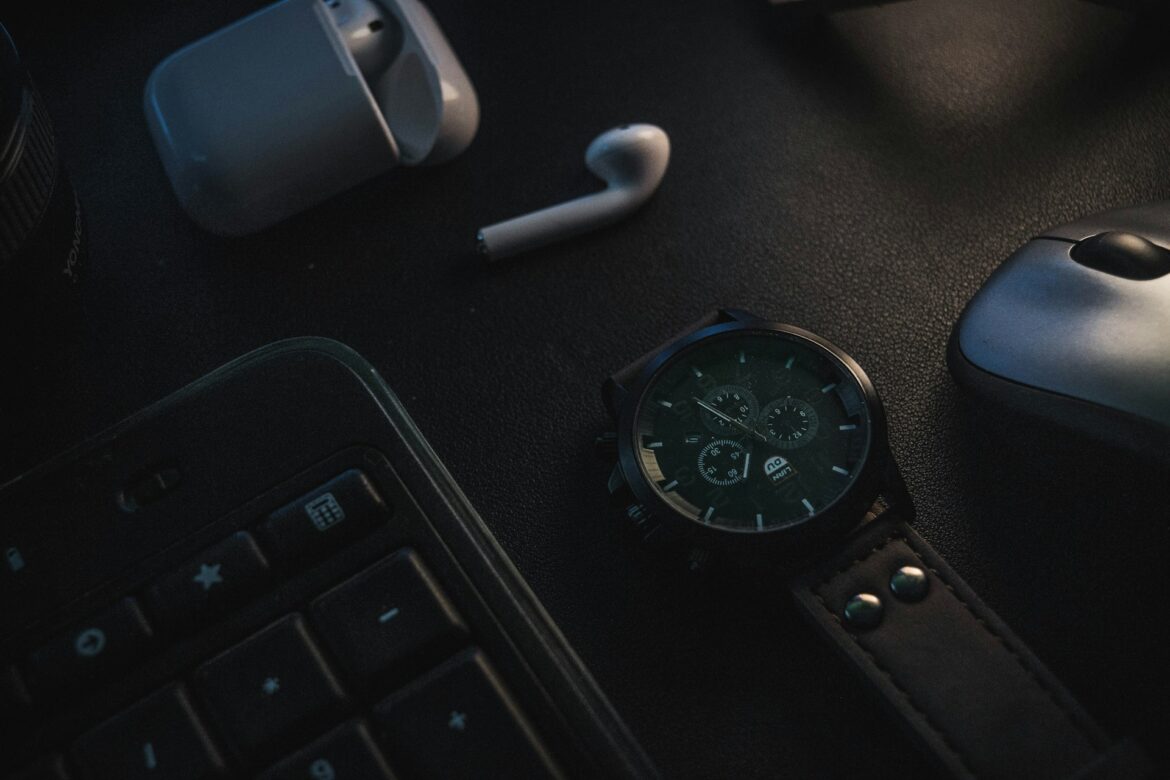
Consider all the devices that you interact with on a daily basis. Your smartphone, your wireless headphones, and perhaps even the smartwatch on your wrist. These devices perform incredible functions; however, have you ever taken the time to consider how the devices actually feel when you hold them? The world of personal technology is not about cramming circuit boards in inexpensive plastic anymore. Today, the gadgets we carry are an extension of our lifestyle.
For a long time, tech companies only cared about making things faster and more powerful. If a computer worked well, it did not matter if it looked like a gray cinder block.
However, as tech became truly personal, the way things looked and felt started to matter just as much as how they performed. We transitioned out of the era of bulky beige monitors and entered a world where sleek lines and high-quality materials dictate our buying choices.
Products Designed for Human Hands and Pockets
Good design bridges the gap between complicated engineering and everyday human life. When a company builds a new piece of personal tech, they have to consider ergonomics, which is just a fancy word for making things comfortable to use. A great gadget should feel natural to hold and easy to carry around without weighing you down.
Such a balance of portability and premium-level engineering can be found in many lifestyle gadgets. Let’s consider an interesting case of modern aromatherapy and dry herb technology. Consumers seek premium performance; however, they don’t want bulky devices. An excellent example of such innovation is the Arizer Go SRT vaporizer, which became a part of our lives in 2026. This gadget introduces brand-new approaches to portability due to its unique housing of a lightweight aluminum frame that conceals fragile glass components. With the help of innovative elements like a magnetized top cap, one ensures protection of its fragile parts without sacrificing compactness, as it easily fits into a pocket of a jacket.
The Importance of Choosing the Right Materials
The materials chosen for our gadgets change how we feel about them. Think about switching from a cheap plastic phone case to one made of smooth aluminum or soft leather. It instantly changes the experience and the tactile feedback of a product directly influences how much a consumer trusts its quality and reliability.
Modern tech brands place great emphasis on using luxury materials such as borosilicate glass, brushed metals, and tactile ceramics. This is more than just about aesthetics, as these materials fulfill certain practical roles as well. The metals allow for proper heat dissipation, glass ensures that flavors and signals remain pristine, and the tactile feel ensures that devices don’t slip from your hand.
When used in harmony, these materials make the gadget less of a machine and more of an object of luxury.
The Focus is on Easy Usage
Have you ever picked up a new gadget and figured out how to use it within two seconds without reading the manual? That is the sign of great user interface design. True design is invisible. It is the satisfying click of a button, the gentle vibration when an option is selected, and menus that make perfect sense.
With time, technological advancement continues to make personal technologies increasingly sophisticated at accommodating users’ behavioral patterns. Unlike the primitive approach, where users had to navigate numerous menus, new gadgets incorporate the use of profiles that can be customized according to the user’s needs. For example, when configuring a smart thermostat for your home heating system, you can customize the device according to your own behavioral patterns.
Thanks to personalization, the tech feels less rigid and more human.
The Shift Toward Sustainable Beauty
In 2026, great design also means being responsible. Consumer behavior data shows that modern buyers care deeply about the environmental footprint of their electronics. People are moving away from disposable tech that has to be thrown in the trash the moment a single part stops working.
Because of this, the design world is shifting toward modular builds and user-replaceable parts. High-quality personal tech items are now being built with easily accessible batteries and durable outer shells. This ensures that the product can last for years rather than months. Designing a beautiful product is no longer just about how it looks on a store shelf; it is about making sure it stays functional, fixable, and elegant throughout its entire lifecycle.
The Bottom Line
Ultimately, the intersection of design and personal tech is all about harmony. The best gadgets do not shout for attention with flashing lights or overly complicated shapes. Instead, they quietly blend into our daily lives, working exactly how we expect them to while looking absolutely beautiful doing it.
Which devices do you use on a regular basis that have seamlessly blended with your life? Let us know in the comments.


