
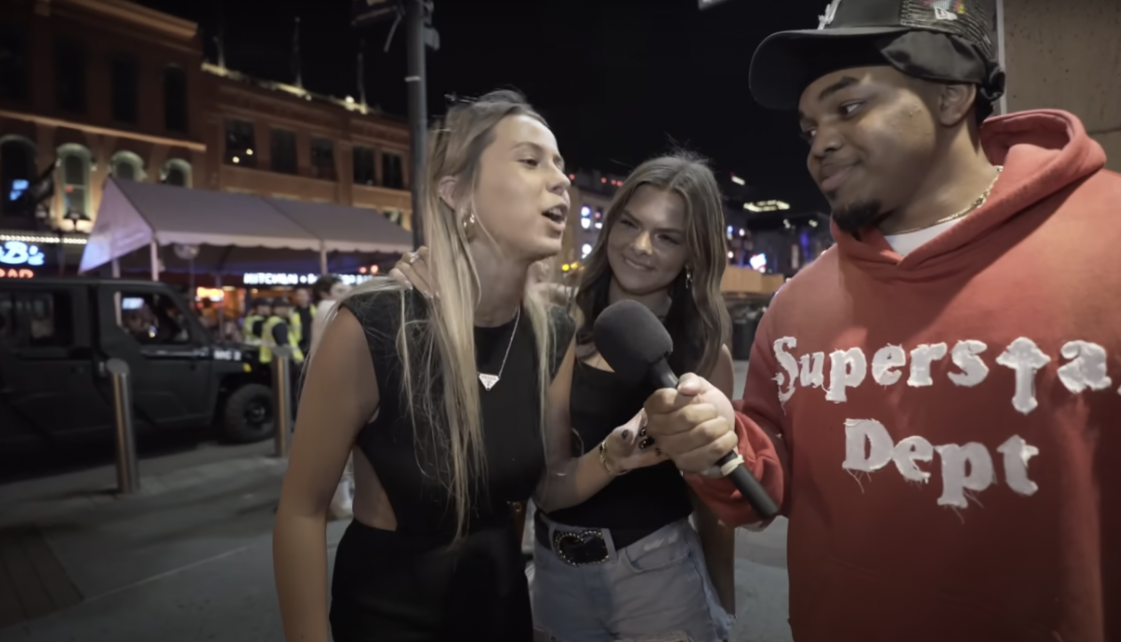
The Hawk Tuah Girl is one of the most instantly recognisable viral figures to emerge from TikTok in 2024, born from a short street interview that exploded across social media in a matter of days. A spontaneous, humorous response during a night out in Nashville quickly evolved into a full-blown internet phenomenon, spawning memes, catchphrases, green-screen edits and even a podcast.
The phrase “hawk tuah,” delivered in a thick Southern accent and punctuated with exaggerated sound effects, struck a chord online thanks to its shock value, comedic timing and the relatability of unfiltered street interviews. As the clip spread, the anonymous woman at its centre was quickly dubbed the Hawk Tuah Girl, becoming a fixture of TikTok trends and meme culture throughout summer 2024.
The woman featured in the viral clip was later identified as Haliey Welch, with her friend Chelsea Bradford appearing alongside her. While Welch initially embraced the attention, her sudden rise to internet fame also brought misinformation, rumours and controversy — illustrating the unpredictable lifecycle of modern viral stardom.
Origin of The Meme
On June 11, 2024, YouTubers and Instagram creators Tim & Dee TV uploaded a short street interview filmed in Nashville, Tennessee. The clip showed two women being asked a playful relationship question, to which Welch responded with a phrase that included the now-infamous “hawk tuah” expression.
The delivery — marked by confident humour, exaggerated pronunciation and comedic timing — immediately set the clip apart from typical street interviews. Within six days, the video amassed millions of views on Instagram Reels, rapidly spreading to TikTok and X (formerly Twitter).
@_theoriginaltiktok Hawk tuah original video 😂 “If i see you on my fyp ima cry😂😂” Creator @DMarloww #fyp #foryoupage #hawktuah
A repost on TikTok the same day accelerated its virality, with users clipping, remixing and quoting the line across multiple formats.
While the Hawk Tuah Girl popularised the phrase in mainstream meme culture, similar spitting onomatopoeia jokes had circulated online years earlier.
As far back as 2021, variations of “hawk putuh” appeared in deleted tweets and reposted screenshots, often used to comedic effect in text conversations. These jokes resurfaced periodically on Reddit, Facebook and TikTok between 2021 and early 2024, laying the groundwork for the phrase’s eventual mass adoption.
In March 2024, a TikTok video using a similar phonetic joke gained over 11 million views, demonstrating that the humour was already primed for widespread recognition before Welch’s clip brought it into the spotlight.
Meme Spread
The Hawk Tuah Girl’s rise from viral clip to meme icon happened almost instantly.
By mid-June 2024, TikTok creators were inserting Welch into everyday scenarios using green-screen CapCut templates, transforming the original clip into a reusable reaction meme. Popular formats included:
-
Cleaning or polishing objects
-
Relationship jokes
-
“Meet the parents” scenarios
-
Caption-based punchlines
A viral TikTok sound tied to the clip amassed over 11,000 uses in less than a week. On X, the phrase was adapted into image macros and pop culture templates, including a widely shared Blade Runner 2049 meme featuring Ryan Gosling.
One of the most notable offshoots was the phrase:
“If she don’t hawk tuah, then I don’t wanna talk tuah.”
This line spread rapidly across TikTok and X, becoming a meme in its own right and further cementing the phrase’s place in 2024 internet slang.
Haliey Welch
On June 16, 2024, Tim & Dee TV confirmed that the women featured in the video were Haliey Welch and Chelsea Bradford. Welch was quickly identified as the Hawk Tuah Girl due to her delivery and presence in the clip.
Photos and videos of Welch wearing branded “Hawk Tuah” merchandise soon surfaced, including promotional images shared by Tennessee-based apparel company Fathead Threads. These posts confirmed Welch’s involvement in official merchandise and showed her signing items using her first name, Haliey.
Talk Tuah Podcast
In September 2024, Welch announced the launch of her podcast, Talk Tuah, produced by sports betting company Betr, co-founded by Jake Paul.
The podcast trailer addressed online criticism directly, positioning Welch as self-aware and ready to move beyond the meme. The show featured high-profile guests including Jake Paul, Logan Paul, Whitney Cummings and Sketch, and premiered on September 10, 2024.
$HAWK Meme Coin Controversy
On December 4, 2024, Welch launched a meme cryptocurrency called $HAWK on the Solana blockchain. Within hours, the token was accused by crypto commentators of being a rug pull, with reports claiming its market value surged before rapidly collapsing.
Multiple crypto news outlets covered the controversy, and Welch subsequently disappeared from social media, later stating she was pursuing legal action against the team behind the project. In early 2025, a leaked podcast episode featured Welch discussing her understanding of the project and denying intentional wrongdoing.
Return to Social Media
In December 2024, Welch became associated with the launch of a Solana-based meme cryptocurrency known as the $HAWK token. The coin experienced a rapid surge in value, briefly approaching a market capitalisation of $500 million, before suffering a dramatic collapse to around $25 million. Following the crash, at least one investor submitted a complaint to the U.S. Securities and Exchange Commission.
The sharp rise and fall of the token sparked allegations that the project had been orchestrated as a pump-and-dump operation. Critics also described the collapse as a potential exit scam, claims that were publicly echoed by crypto investigator and journalist Coffeezilla, who further suggested that insider trading may have taken place. Welch and members of her team have firmly rejected all wrongdoing.
Before the end of the month, legal action was taken against the creators of the $HAWK token in the U.S. District Court for the Eastern District of New York. The lawsuit alleged that the cryptocurrency had been unlawfully marketed and sold without proper registration. Although Welch was not listed as a defendant, she issued a statement addressing the case, stating that she was taking the matter “extremely seriously” and would fully cooperate with all relevant legal processes.
In subsequent comments, Welch maintained that her involvement was limited, claiming she was compensated solely through a marketing fee and did not profit directly from the token’s trading or performance.


