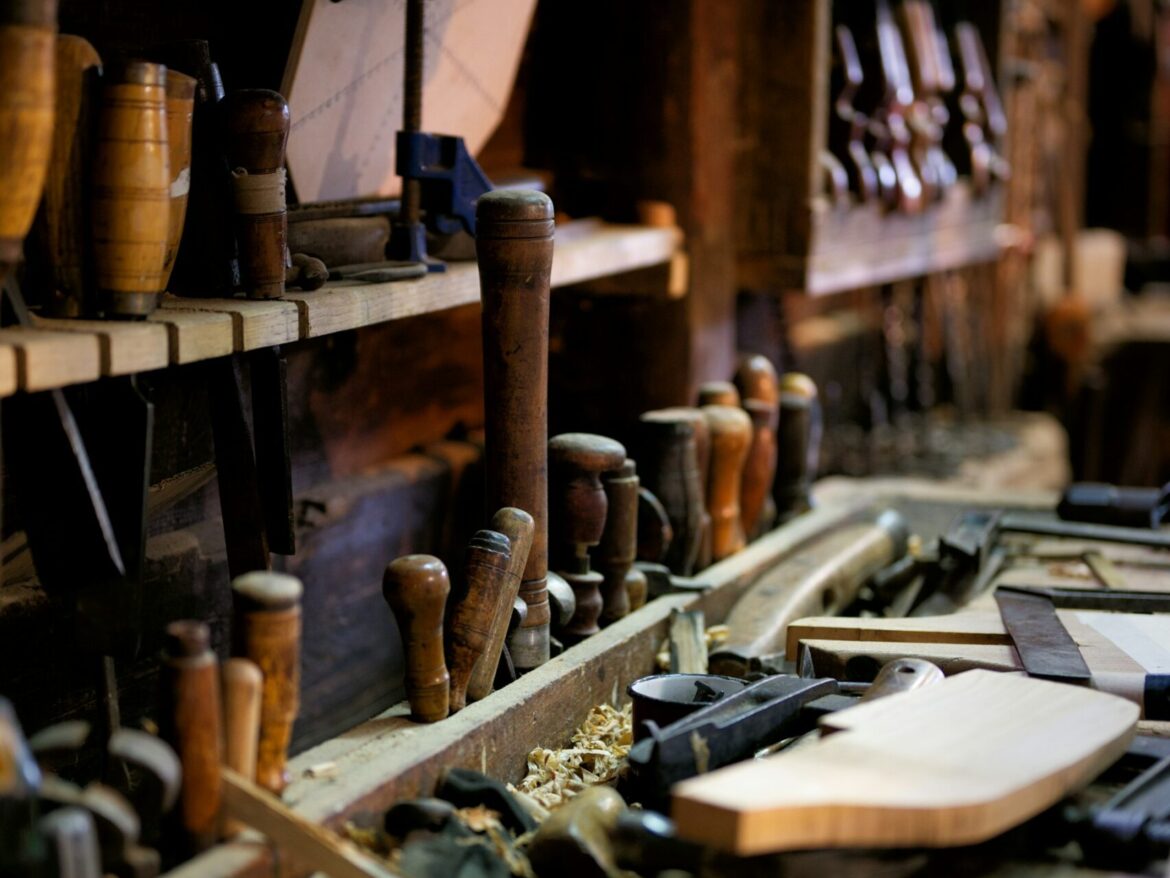
The choice of the correct handle shape is just as important as the choice of the tool itself. No matter whether you are working with carving knives, axes, or mallets, the shape of your wooden handle will directly affect your comfort, control, and safety.
Why Handle Shape Matters More Than Most People Think
Many people focus only on steel quality, forgetting that the handle is where the human and the tool meet. A truly comfortable grip makes the tool feel if it is truly comfortable, you will not be aware of the tool’s presence at all, and the tool becomes more efficient and easier to control.
A poorly shaped wood handle may feel uncomfortable after a while, yet it can still be used. High-quality wooden handles are perfectly shaped to the natural grip, and thus the tool feels like a natural extension of the hand.
Straight Handles – Simple Shape, Maximum Versatility
Straight handles remain one of the most popular designs due to their simplicity and adaptability. Straight wooden tool handle designs work well when hand positions need to change frequently. They suit tasks that require flexibility rather than constant grip pressure.
Chisels, small knives, and scrapers often benefit from straight wood handles for tools, especially when paired with balanced weight and proper handle length.
Tapered and Barrel-Shaped Handles for Precision Work
Shaped handles are ideal for controlled, detailed tasks. Tapered handles allow a pinch grip near the blade, which is perfect for fine carving and detail work. This is especially important when selecting the handle shape for knives.
Barrel-shaped or palm-filling handles provide comfort during short carving sessions. Many turned wood handles follow this design because it fits naturally into the palm.
Curved Handles for Power and Leverage
Curved designs are typically used for forceful actions. Curved wooden handles are a great advantage for axes and adzes, providing better swing mechanics and improve impact control through their curvature.
Well-shaped curves are great for the wrists, as they help keep the wrists aligned, and thus, when chopping repetitively, the user does not feel strain in the arms.
For precision tasks, curved wood handle tools can limit control and make fine movements difficult.
Ringed, Collared, and Reinforced Handle Designs
Reinforcements improve durability under stress. Mallets and struck tools often use reinforced wooden handles to prevent splitting. Collars and rings protect the weakest point of a wooden handle during repeated impacts.
Not all tools need reinforcement. Light-duty wooden handles for tools perform perfectly without added metal.
Matching Handle Shape to Grip Style and Task
Different jobs demand different methods, and no one type of handle is suitable for every job. The grip of the tool, the force applied, and the material used are all factors to consider when selecting wooden handles for tools. It is possible to increase precision, comfort, and the tool’s lifetime by matching the handle design to the actual working conditions.
Push cuts often benefit from straight or lightly tapered wooden tool handles, while pull cuts feel more secure with subtle contours. Chopping motions require longer wood handles for tools to generate momentum safely.
One-handed carving tools usually use compact wooden handles that allow finger control. Two-handed tools depend on longer wood tool handles for leverage and stability.
Woodworking tools often need firmer, shaped wooden handles for control, while leather tools favor smoother wooden handle tools that reduce friction during repeated movements.
Handle length affects torque and safety. Short handles offer precision, while longer wooden handles provide power but require space and control.
Correct thickness reduces hand strain. Poorly sized wood handles force excessive grip pressure, leading to cramps and fatigue.
Practical Examples of Handle Choices for Common Tools
Looking at real-world tools makes handle selection much clearer. Different tasks demand different handle shapes, materials, and proportions. Understanding how wood handles perform in practice helps you choose or replace the right handle with confidence.
- Handles for Carving Knives and Sloyd Knives
These tools often use tapered or barrel-shaped turned wood handle made from durable wood for knife handles to support fine control.
- Handles for Axes, Adzes, and Heavy Wood Removal
Long, curved wooden handles deliver power, balance, and shock absorption for heavy material removal.
- Handles for Mallets and Struck Tools
Mallets require thick, reinforced wooden handles that can withstand repeated impacts without splitting.
- When to Replace a Handle Instead of the Tool
If the metal head is still sound, replacing worn wooden handles is often cheaper and smarter than discarding the entire tool—especially when quality wooden handles for tools are available.